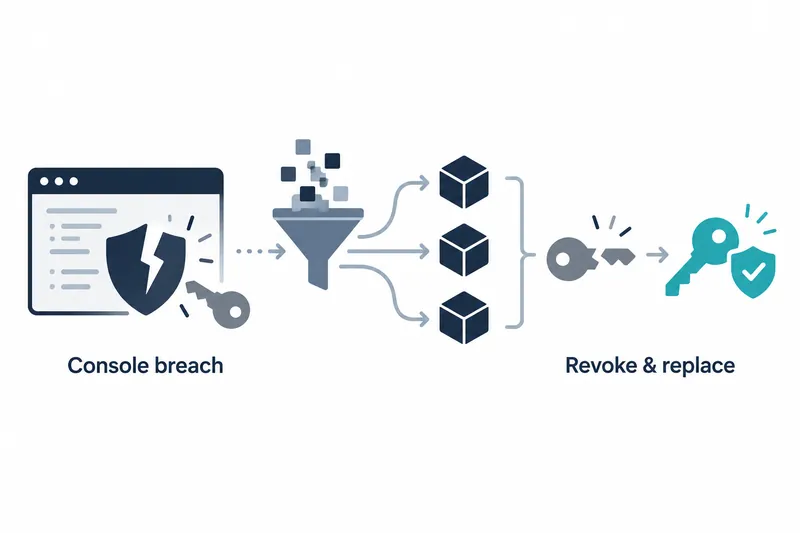
On October 17, 2026, AI coding tool OpenCode disclosed a security breach affecting 1.4% of console users. It affected some users who connected external AI services. Notified users must revoke those services' access keys and issue new ones.
1. Possible key exposure in a system being decommissioned
According to a customer notice reported by Notebookcheck, unauthorized access occurred in a legacy system OpenCode was decommissioning. The notice said API keys for OpenAI, Anthropic and others stored in workspaces may have been exposed.
An API key acts like an entry pass that an application presents to use an external AI service. If someone obtains it and sends requests, the original account holder may be charged. External service keys must therefore be blocked independently of tool login issues.
In an official X post, the company said it could not share details because the incident was ongoing. It said Anthropic, OpenAI and Google were involved in the response.
2. What 1.4% refers to and user reports of damage
The company's 1.4% figure refers to the affected share of all console users, not just users who connected external services. Those affected were some users with external services connected. This must not be treated as the affected share of all OpenCode users.
The company said it emailed everyone affected that morning and that users who received no email were unaffected. CellCog notes that the total console user count was not disclosed, leaving the number affected unknown. Neither the number of exposed keys nor total losses was provided.
Notebookcheck reported that one user saw an unauthorized $400 charge on their Anthropic account. Another reported Google charges of about 200 euros and a project suspension for excessive abuse. These are individual reports, not a measure of total losses.
3. What the link to a model distillation attack means
OpenCode said the breach was linked to a large-scale model distillation attack. Model distillation trains a model using another model's responses as training material. The notice cited a link to an attack aimed at collecting model responses, beyond unauthorized charges alone.
CellCog suggested that using customer keys with legitimate billing histories could make attack requests look like normal usage and shift costs to customers. This is CellCog's inference, not an attack path confirmed by OpenCode. No details were given on which models were called or exactly how the keys were used.
4. Revoke keys through each provider
Notebookcheck reported instructions to revoke and replace keys in the relevant provider's dashboard, update applications using them and review recent usage. CellCog advises revoking keys stored in the console and creating new ones through OpenAI's and Anthropic's key management pages.
Users are also directed to manage Google keys through that service's key management page. Some users reported console login failures, but CellCog says console access is not needed to revoke external keys. There is no reason to delay blocking keys while waiting for OpenCode login access to return.
Check recent days' usage for unfamiliar models or regions and unexpected request volumes. CellCog recommends reporting suspicious usage to provider support with dates and keeping the notification email as evidence. No information was given on refunds for unauthorized charges.
5. Convenient connections come with key management duties
Connecting external keys lets developers use multiple AI models in a coding tool through their own accounts. But as CellCog notes, entrusting keys to more tools creates more copies to protect. In this case, that responsibility extended to a system being retired.
CellCog recommends separate keys for each tool, spending limits and alerts, and revoking unused keys. This limits access and costs but adds the burden of managing keys and budgets separately. When replacing a key, settings for applications and automated tasks using it must also be updated.
The priority in this response is revoking and replacing external service keys and reviewing usage, rather than restoring access to the tool.