Developers creating 3D game assets can now try a tool that turns short text requests into browser-viewable scenes and files for editors. Independent developer CCORE's preview model offers a workflow for inspecting generated scenes and downloading them with a button.
1. From scene preview to asset export
CCORE's Qwen3.5-4B-GLB-3D-Coder is a coding model that creates Three.js-based 3D scenes from requests. Rather than outputting a 3D object file directly, it generates code that renders a scene in a browser.
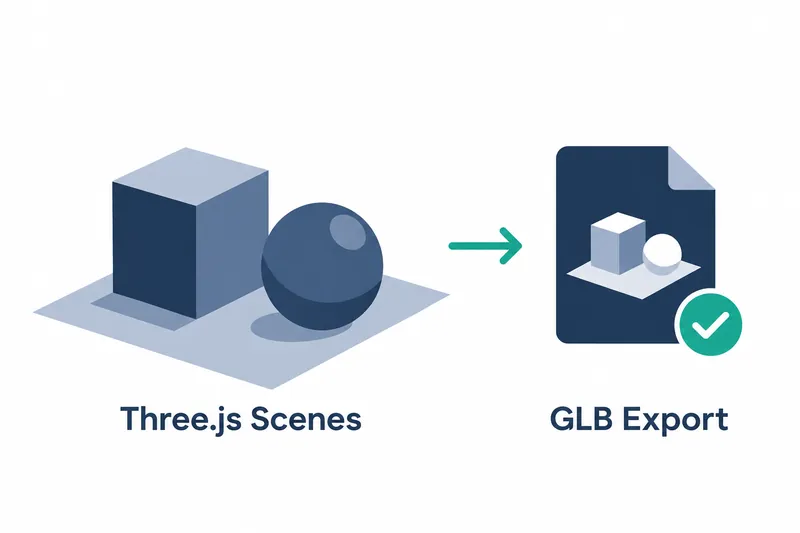
The result is a single HTML file containing the scene and an export button. Users open it in a browser, inspect it, and download it as GLB, a file format for 3D scenes. The generated code includes the steps to turn the visible result into a file that can be transferred to an editor.
The creator also shared an example of importing the output into the Godot editor.
2. Updated checkpoint and examples
According to the model card, the runnable files were updated with a new checkpoint on November 2, 2026, at 04:50 UTC. A checkpoint is a model saved during training. Both size-reduced quantized files, Q4_K_M and Q8_0, were replaced. The creator reports substantially improved visual quality in their tests.
The filenames have not changed. The creator advised users who downloaded the files before that time to delete their existing copies and download them again. Generation settings and the system message remain unchanged, so replacing the files is the key update for existing users.
Public examples include jungle and snowy siege camps, a blue goblin, a red orc, and a mountain command post. Two results from the same mountain command post request appear side by side. The creator said the example prompts were excluded from the training material and the dataset planned for release.
3. How developers can try it now
The model page lists GGUF, a model file format runnable with tools such as llama.cpp. The following terminal command is provided in the original source.
# Run inference directly in the terminal:
llama cli -hf ccore/Qwen3.5-4B-GLB-3D-Coder:Q4_K_M
After launching it, supply the model card's system message and a short English asset request. The system message instructs it to create low-poly game assets using few faces and include a scene display and export button in one file. Specify animation in the request if needed; the system message directs the model to include that movement in the exported file.
An optional vision projector, an auxiliary module that processes image input, connects reference images to the model input. It requires a runtime supporting GGUF with both image and text input. The file is 644 MiB and is unnecessary for text-only input.
The creator said most generations worked on the first attempt in their tests, especially with English requests.
4. Model scope and next steps
The current model is an independent preview based on Qwen3.5-4B, not an official Qwen release. The creator says it was trained on 25 game asset categories, including characters, weapons, natural environments, buildings, and vehicles.
A community example features a playable 3D role-playing game demo made by Naoki Kishida using generated assets.
The creator plans to double the training material, previously centered on simple requests, to support more categories and detailed customization requests. Additional example generation is complete. After training, they plan to release the full dataset and full Safetensors weights, the numerical information learned by the model.
Plans for the next model include 100,000 high-quality examples and a context length, the input length handled at once, of 8K~128K tokens. The training run is planned to be about 15x larger than the current model's. The creator's first goal is reliable asset creation from a single request. Later, they envision a version for agent runtimes: program-based environments that automatically generate, test, and revise outputs.
5. A simpler workflow and remaining burdens
Viewing a scene in a browser and downloading it within the same workflow combines steps for moving prototype assets into an editor. In return, developers must download the model files and prepare a runtime environment. The model page lists Q4_K_M at 2.71 GB and Q8_0 at 4.48 GB, useful figures when planning storage.
The creator said some outputs required retries or small code changes. Rather than putting the first result straight into production, it is worth using the model as a starting point to test both browser previews and editor imports.
The model's core value is not just creating scenes, but providing files to import and test in an editor within a single workflow.