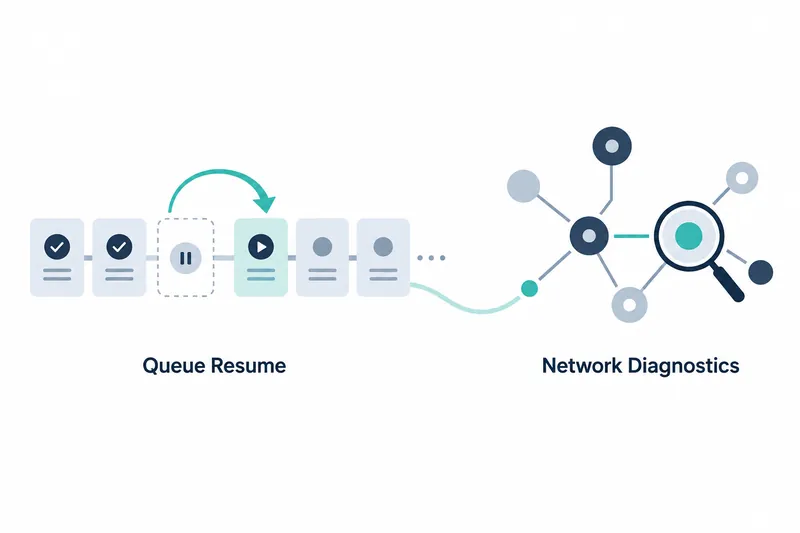
OpenAI's October 29 Codex release adds a way to resume unloaded tasks after queuing a message, along with focused network diagnostics. Developers can choose a resume or diagnostic command to reopen tasks or check connection issues.
1. A command to queue a message and reopen a task
If a thread, the conversation unit for a task, has been unloaded from memory, users can opt to queue a message and then resume it. The first command below provides this feature. The second is for network checks.
codex queue --resume
codex doctor --network-only
The second command focuses on configuration, connectivity, and WebSocket communication, which supports real-time two-way exchanges. It narrows checks to networking issues. Separate commands now serve task resumption and connection diagnosis.
2. Preserve approvals and usage when reopening tasks
This release preserves established approval and permission settings when threads resume or fork. Forking creates a new workflow from an existing conversation. The fix keeps prior approval and permission states in reopened or forked tasks.
Reasoning token usage accounting also carries across resumes and forks. OpenAI said this fix prevents conversations from being compacted too early. Alongside resumption, usage tracking now maintains continuity.
The default thread unload delay is reduced to 1 minute. Unloading removes a task from memory. Together with the option to reopen unloaded threads, this changes both when tasks leave memory and how they resume afterward.
The resume screen preserves list pagination and selection state for each system providing tasks. It also handles the collection of resume candidates from multiple sources independently.
Restoring an archived parent thread also restores the child threads created under it. These resumption improvements cover both individual conversations and the process of finding linked tasks again.
3. Stronger connection recovery and diagnostic evidence
The terminal interface improves recovery when reconnecting after a disconnection. It also fixes handling of exit commands while offline. Beyond the new diagnostic command, the release improves behavior when connections actually drop.
The release preserves evidence from WebSocket connection tests while redacting sensitive diagnostic details. This retains traces needed for diagnosis while reducing sensitive content in information shared with others.
Clients connecting to remote app servers support negotiated WebSocket compression, and app servers now record WebSocket compression statistics. Requests for GitHub release information use more retries with random delays between attempts. These changes strengthen communication and retries alongside connection diagnostics.
4. More recovery options, more information to review
Diagnostic uploads now include directly linked threads. This adds context from connected tasks but also broadens what gets shared. Developers sending diagnostics have reason to review information from both individual and linked tasks.
The queue command now rejects unsupported options. Developers reusing existing commands need to check whether their options are supported.
Codex 0.166.0 goes beyond adding a command to reopen tasks: it also strengthens continuity for approvals and usage, along with tools for investigating connection issues.