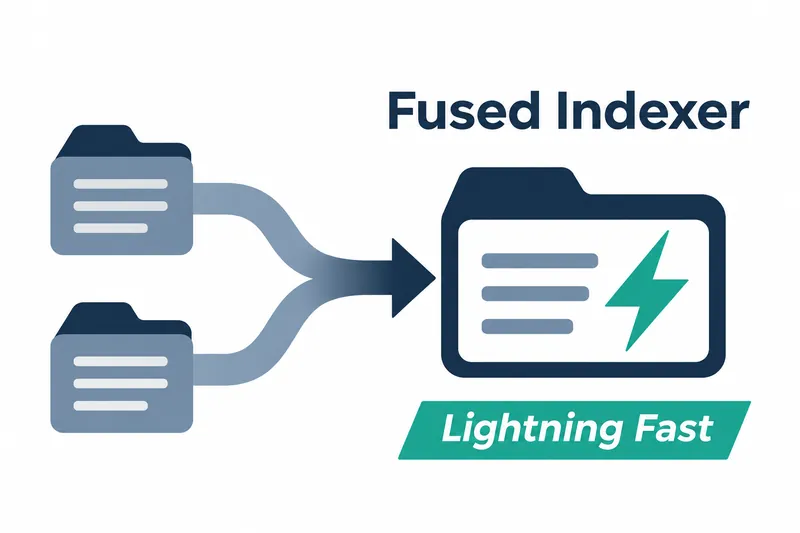
The new llama.cpp release, used by developers running language models locally, cleans up internal token-selection paths. It keeps calls to the existing fused operation, which combines several computations into one. It removes branches that automatically decided whether to use it or split computation into separate operations as a fallback.
1. Cleaning up existing paths rather than introducing a new computation method
Released on November 21, 2026, b12606 is a prerelease incorporating pull request #32650, a test release before a stable release. The release notes say token selection now always uses the fused operation. They describe removing related internal settings, automatic detection, and the non-fused fallback, an alternative computation procedure.
Before this change, fused operation use was already enabled and automatic detection was disabled. This release mainly removes leftover branches and detection code to match the existing execution path, rather than enabling a new method.
Users therefore do not need to add a separate setting to enable fused operations for this change. Developers modifying the source should focus their review on the removed internal settings and branches.
2. Removing fallback computation scattered across models
The lightning indexer computes scores for candidate tokens a model can attend to. The change keeps the fused operation call that combines these computations, replacing the fallback that chained individual operations together.
Non-fused branches were removed from several model implementations, including DeepSeek 3.2 and DeepSeek 4. The shared code also loses the procedure that automatically checked whether a device supported this operation.
Internal fields tracking fused operation use were also removed. In qwen4exp.cpp, the existing fused operation call remains, and only its usage tracking was deleted. The changes include both computation branch removal and bookkeeping cleanup around existing calls.
All 14 modified files are internal source files under src/, with 23 lines added and 269 deleted in total. Deletions exceed additions because the cleanup covers model-specific fallback computation as well as shared detection code.
The pull request was merged into the default branch, and its author reported building the llama target locally. This was presented as a verification step performed after applying the cleanup.
3. Standardizing the mask format for excluding candidates
Masks marking candidates to exclude from computation are created in F16, a 16-bit floating-point format, to meet the fused operation's requirements. Below is the start of the creation function from the merged code; its last argument specifies this format.
Previously, a workaround copied and temporarily changed another attention setting, which controls how relationships between inputs are computed. The required format is now passed directly to the function. This cleans up both the execution path and how its inputs are created.
static ggml_tensor * build_attn_inp_kq_mask(
        ggml_context * ctx,
        const llama_kv_cache_context * mctx,
        const llama_ubatch & ubatch,
        const llama_cparams & cparams,
        bool force_f16 = false) {
    const auto n_kv     = mctx->get_n_kv();
    const auto n_tokens = ubatch.n_tokens;
    const auto n_stream = cparams.kv_unified ? 1 : ubatch.n_seqs_unq;
4. Less code to maintain, fewer internal options
Developers no longer need to maintain two ways of performing the same selection computation. In return, models whose branches were removed lose the option to switch back to non-fused computation through internal settings. Both the benefit and the cost stem from simplifying execution paths.
DeepSeek 4.1 retains an exception: disabling sparse attention, which computes relationships using only selected tokens, leads to non-fused computation. The pull request says this fallback remains because LLAMA_DSV41_SPARSE=0 can disable that path.
The source provides no measurements comparing speed or memory use before and after this change. The amount of deleted code is better read as evidence of a reduced maintenance scope.
The key change in b12606 is aligning code with the fused operation already in use, reducing both the burden of maintaining model-specific fallbacks and the options they provided.