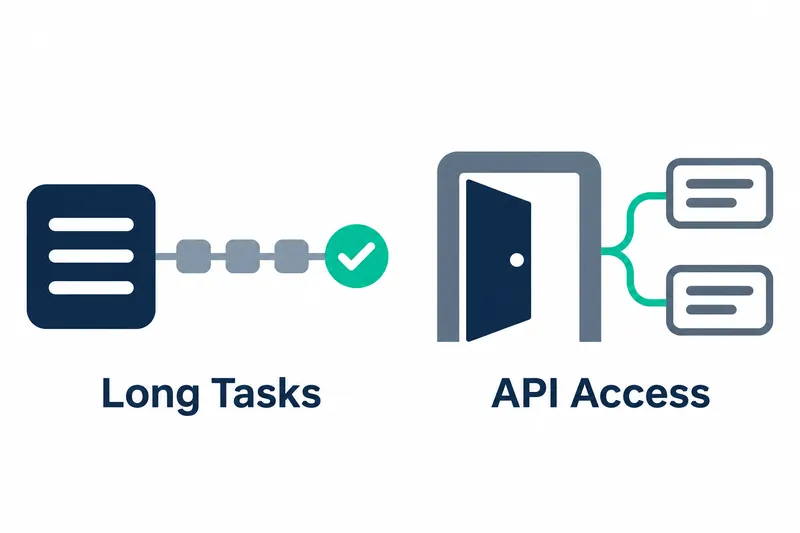
On November 18, 2026, Google unveiled Gemini 4 Neon for multistep coding and analysis. Developers can assign long-running tasks through a paid API and adjust reasoning depth—the steps used to solve problems—and cost to task difficulty.
Businesses can select Neon in Gemini for Business, while Google AI Pro and Ultra subscribers can use it in the Gemini app and Google Antigravity. Developers can also start API calls in Google AI Studio.
1. Between complex projects and everyday execution
Neon sits between Carbon for the toughest long-term projects and Hydrogen for fast everyday execution. Google says it combines depth and efficiency for complex coding, analytical reasoning, and business workflows. It says Neon reduces unnecessary file rereading and shares progress during long agent tasks that autonomously use tools across multiple steps. It also supports summarizing earlier conversations to preserve task context.
According to Google, Neon scored 61 at its deepest reasoning level on the Intelligence Index, placing 3rd overall, and ranked 2nd on the Vals Index at 70.9%. In the new Agent Arena index, it ranked 2nd worldwide with 1,336 points across more than 4,200 real agent sessions. Google says it also ranked 2nd there for adjusting task direction in response to user corrections.
2. Results in coding and analysis evaluations
According to Google, Neon ranked 1st on the Artificial Analysis Coding Agent Index with 58.6 points and scored 65.2% on Terminal Bench 4.1. Its 46.2% on FrontierCode 2.0 used the default reasoning level. Google highlights fixing bugs across multiple files and improving code structure as key uses.
On SWE-sweep, which evaluates repository-level work on collections of code and files, results varied with the tools and runtime used to run the agent. Google reported 12.8% in the mini-SWE environment and 39.0% in Google Antigravity. Adoption therefore requires assessing the actual tool environment alongside model selection.
Google reported 73.5% on chart reading, 75.8% on Agents' Last Exam v1.1, and 56.3% on Automation Bench. Neon targets work that combines inputs such as documents, tables, and charts in a single context to produce outputs such as reports.
In separate science and mathematics evaluations, Google reported 70.5% on Terminal Bench Science, 84.0% on RiemannBench, and 71.3% on HLE-Diamond. Google cited quantitative analysis, mathematics, and technical research as use cases.
3. Calling the paid API and continuing long outputs
The model identifier is gemini-4-neon, and the example below calls it through the Interactions API. It is available on paid tiers of the Gemini API.
The default reasoning level is high. Users can select from four levels, including shallower and deeper reasoning, to suit the task, and can also call the model through the existing generateContent route.
from google import genai
client = genai.Client()
interaction = client.interactions.create(
    model="gemini-4-neon",
    input="Build an interactive single-file HTML token bucket rate-limiter simulator with live sliders for burst size and request traffic."
)
print(interaction.output_text)
Synchronous responses, returned when a request completes, support up to 65,536 tokens. Input, reasoning, and output share a single 1,048,576-token context window, the amount that can be processed at once. For longer outputs, configure background execution and an output limit, or use the continuation feature in the latest development tools.
Implicit caching, which automatically stores repeated input, applies by default to prompts of 4,096 tokens or more. Cache-hit input that reuses stored input receives a discount.
4. Balancing lower task costs and token spending
Rates are the same across the full context range. Cache-hit input costs less than regular input, and output pricing includes reasoning tokens.
Table: Neon API input and output pricing
Conditions: Gemini 4 Neon, paid Gemini API tier, uniform pricing across the full context range
Unit: dollars (per 1 million tokens)
| Item | Price (dollars) |
|---|---|
| Input | 3.00 |
| Cache-hit input | 0.15 |
| Output (including reasoning tokens) | 15.00 |
According to Google, per-task costs at the default reasoning level are 32% lower than Carbon's. It says combined performance and cost evaluations on the Vals Index and Agent Arena at that level show per-task costs about 50~80% below competing top-tier models. Google says costs at the deepest xhigh level are more than 36% lower than competing models at their highest settings.
Adjusting reasoning depth can balance quality and spending, but the deepest level increases response time and token use. Internal instructions that guide how the model uses external material, and function declarations specifying callable names and inputs, are also billed. Connecting Google Search adds per-query charges. Teams therefore need to manage reasoning levels and search usage as well as per-call prices.
5. Safety and scope of use
Google reported legitimate-task refusal rates of 1.98% on Terminal Bench 4.0 and 0% on Terminal Bench Science. The cheating rate on Terminal Bench 4.0 was 0.0%, while a separate coding-cheating evaluation found a shortcut-taking rate of 2.45%.
The model card lists a knowledge cutoff of March 2026 and notes that knowledge in some fields may be older. It also identifies the possibility of generating factually incorrect content as a limitation.
Neon is an option for complex, long-running tasks through a paid API, with cost efficiency depending on managing both reasoning depth and additional usage.