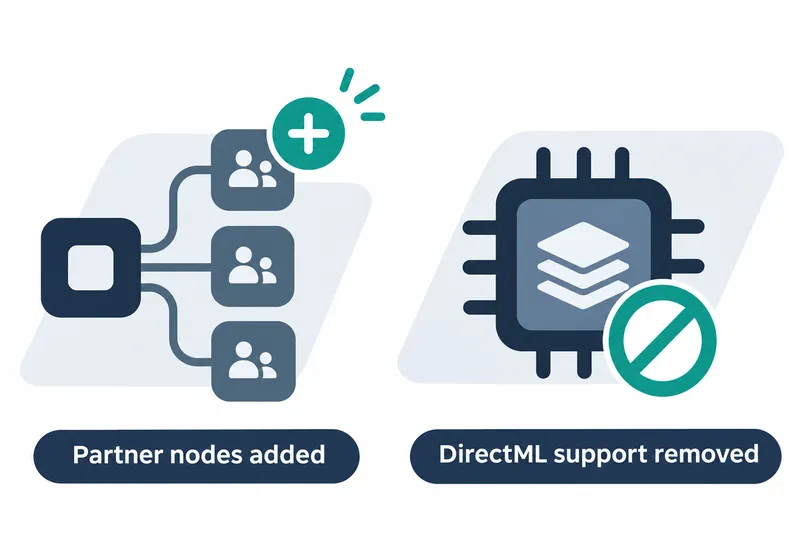
ComfyUI has released 0.46.0 with more partner nodes, components that connect external generative services to workflows. Image and video creators gain new generation and editing options. Users running DirectML should review their runtime environment before updating, as support has been removed.
1. More options for image generation and post-processing
Released on November 18, 2026, this version adds Kling 4.0 nodes for image and long-image generation. Nodes for the same model also gain 4:3 and 3:4 aspect ratios. Alongside new generation features, there are more options for image proportions.
LTX gains an AlphaGen node. It also gains nodes for converting standard dynamic range images to a wider dynamic range, adjusting composition, and upscaling. Dynamic range is the span of brightness and darkness an image holds. Partner node expansion covers both image generation and refinement.
MiniMax H3 Image nodes are also new. RMBG 3.0 has been added to the existing background removal node. Image creators can explore a new generation model and features for post-processing, or refining generated results.
2. Video gains more output and duration options
The HeyGen Video 1.0 node adds 1080p output, 30-second clips, and automatic duration selection. These figures in the release notes describe supported video output and duration options, not processing speed measurements.
A HeyGen Avatar 6 node has also been added. The release adds an avatar node alongside enhanced video output settings. When reviewing video features, check the new avatar node separately from the existing video node's output settings.
Error handling for existing video features has also changed. Google-Omni now downloads generated videos even when Google marks the file as failed. This changes how generated results are retrieved, rather than adding a new model.
3. Check partner node moves and model replacements too
Nodes for Wan, Krea, and Luma have moved to Comfy Router. The release notes also mention additional partner node moves. Partner-related changes in this version include relocating existing nodes as well as adding new features.
For language models, Fable 5.2 support has been added, while the retired Claude Sonnet 4.5 has been removed. Alongside new model support, users should check whether models used in existing workflows remain available.
FishAudio's speech recognition model has changed to transcribe-1-pro. This replaces the model used by the existing speech recognition feature, rather than adding another model option.
Users of partner nodes should check their workflows after updating, focusing on the nodes and models they already use. Looking only for newly added nodes makes it hard to also catch moves, removals, and replacements.
4. DirectML users should review their runtime environment first
The release notes explicitly state that DirectML support has been removed. For users running ComfyUI this way, runtime support changes take priority over new partner nodes. If an environment requires the existing setup, review how to address this before upgrading.
More generation and editing nodes bring benefits alongside the burden of adjusting existing setups. DirectML users in particular need to review their runtime environment. Users of moved or replaced partner features also need to spend time checking existing workflows.
These release notes do not provide alternative ways to run ComfyUI instead of DirectML or detailed usage procedures following the partner node moves.
ComfyUI 0.46.0 broadens creative options, while making runtime environment checks a higher priority than adopting new features for DirectML users.