Reflection released its first open-weight model for coding, reasoning, and multistep automated tasks. Developers can download its learned weights, run it locally, and train it further for their needs. Integration with deployment and evaluation tools is also available.
1. Release scope and model size
The [October 16, 2026 announcement](https://reflection.ai/blog/beam-is-available) says Beam 1.0 weights use the Apache 2.0 license. The [model card](https://huggingface.co/reflection/Beam-1.0-501B-A23B#usage) specifies commercial and research use. It says further training and training other models on its outputs are not prohibited.
The release includes BF16 weights, a format representing numbers in 16 bits. It is an instruction-trained text-input, text-output model developed primarily for English use.
The accompanying FP8 and NVFP4 formats represent numbers with fewer bits. Lower-bit formats offer a way to reduce memory requirements.
Reflection also said it was releasing auxiliary models that accelerate generation by proposing upcoming tokens. Tokens are the units into which a model divides text for processing.
The model has [501.3 billion parameters, with 23.4 billion active per computation](https://huggingface.co/reflection/Beam-1.0-501B-A23B#model-overview). Parameters are its learned numerical values. This sparse mixture-of-experts architecture selects some expert modules rather than all of them. The amount involved in computation therefore differs from the total weight size.
Context length is the amount of text a model can process at once. This model [supports 1 million tokens](https://huggingface.co/reflection/Beam-1.0-501B-A23B#model-overview).
2. Responsibilities shift with self-hosting
Reflection said [existing inference tools, including vLLM and SGLang, supported it from day one](https://reflection.ai/blog/beam-is-available). It said work with partners optimized runtime settings and kernels that combine operations, reducing memory requirements and accelerating generation.
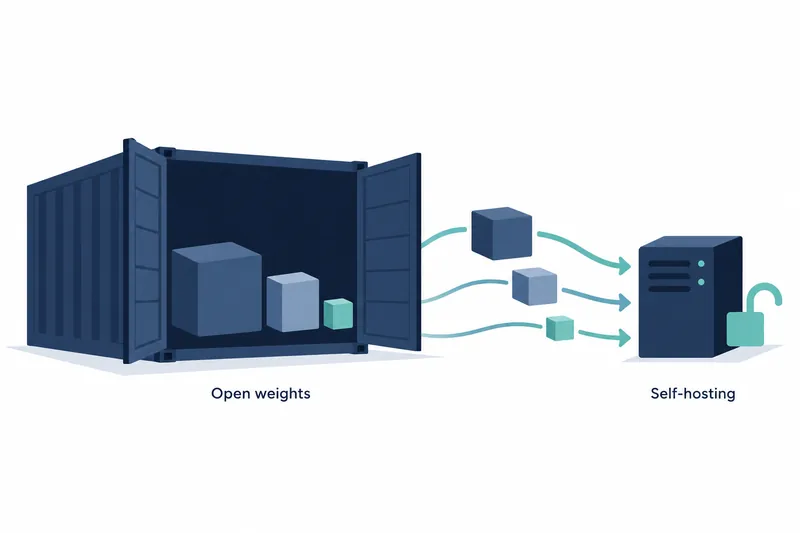
Developers can download the weights for self-hosting or use a provider's hosted service.
[Mirror CLI, a terminal task tool](https://reflection.ai/blog/beam-is-available), lets users switch models or endpoints, approve tool calls, and monitor work.
Self-hosting offers direct control over deployment and custom training. Operations teams must instead handle model execution, evaluation, and safety checks. The [model card](https://huggingface.co/reflection/Beam-1.0-501B-A23B#usage) also advises checking applicable legal requirements, including privacy and export regulations.
3. Compare precision scores within the same test
The [model card evaluations](https://huggingface.co/reflection/Beam-1.0-501B-A23B#benchmark-results) all used instruction-trained models. Temperature, which controls generation randomness, was 0.7. The cumulative probability threshold for narrowing next-token candidates was 0.99.
Neither source specifies minimum deployment hardware or memory requirements by precision. The benchmark hardware and detailed runtime configurations were also undisclosed.
On the terminal-task evaluation [Terminal Bench v2.1, BF16 scored 80.1%](https://huggingface.co/reflection/Beam-1.0-501B-A23B#benchmark-results). This is the same-test baseline for the lower-precision results below.
On the same test, [FP8 scored 78.9% and NVFP4 78.4%](https://huggingface.co/reflection/Beam-1.0-501B-A23B#benchmark-results). These were 1.2 and 1.7 percentage points below BF16, respectively.
SWE Bench Pro v2-Hard evaluates software engineering through problems in real repositories. Its [scores were 76.5% for BF16, 78.4% for FP8, and 78.6% for NVFP4](https://huggingface.co/reflection/Beam-1.0-501B-A23B#benchmark-results). Lower precision thus scored higher here. Precision rankings vary by task. Adoption teams should check quality and resource use on actual work rather than generalize one test's results to every task.
These scores do not measure throughput or operating costs. The model card's claimed reasoning-token savings lack a comparison baseline and measurement conditions. They are therefore not used here as evidence of self-hosting costs.
4. Custom training and safety evaluation are separate tasks
Reflection said it [provides further-training procedures and integration tools](https://reflection.ai/blog/beam-is-available), including large-scale reinforcement learning. This training adjusts behavior using rewards for outcomes. However, its [self-distillation procedure was planned for release in the coming days](https://reflection.ai/blog/beam-is-available) at announcement time. That procedure trains small additional training modules on verified task execution records and repeats the process. Available weights must be distinguished from forthcoming training procedures.
Its internal safety evaluation aggregated all harmful categories. [BF16 refused or redirected 88.9% of harmful requests and complied with 81.5% of benign requests](https://huggingface.co/reflection/Beam-1.0-501B-A23B#safety--alignment). These figures describe response behavior in that evaluation, not a safety guarantee for deployment environments.
Releasing Beam's weights expands deployment control but does not replace precision selection or quality and safety validation on actual tasks.