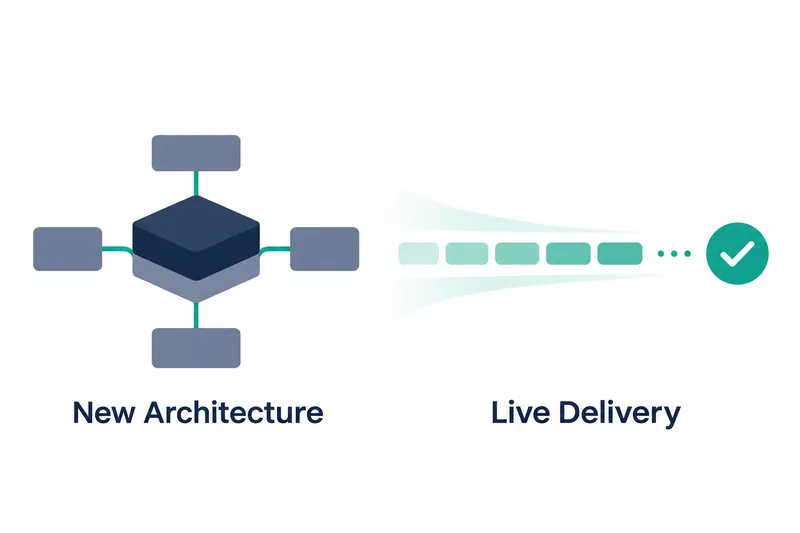
Alibaba unveiled Qwen4-Max. Its new architecture and phased delivery of intermediate results for long tasks let developers and business teams check results early and change direction as work progresses.
1. Targeting capacity and efficiency with a sparse architecture
Qwen4-Max uses a sparse mixture-of-experts architecture, selecting only some experts per computation. The company reports 2.4 trillion base parameters, 71 billion active per token, plus 328 billion embedding parameters. These learned values represent local token patterns as numerical vectors.
It combines layers that compress past information into a fixed size with layers that selectively read relevant context in small blocks. The company says this reduces the computational burden of processing long inputs.
In company pretraining tests, Qwen4-Max-Base had about 5–13% lower bits per byte than Qwen3.8-Max-Base across knowledge, code, Q&A, and science and technology, with 25% fewer active parameters. This metric measures text prediction through compression; lower is better. The company's chart multiplies values by 10.
2. Delivering intermediate results so users can steer the work
Live Delivery provides a usable first result rather than a finished output all at once. The agent refines subsequent outputs based on execution results and user needs. Users can correct errors or change direction along the way. The company also open-sourced Qwen-Live-Delivery-Plugin to implement this feature.
The company cited Qwen4 coolant research as a long-running example. It said the model built a space of 2.7 million molecular candidates over 48 hours. Four cycles fed design, synthesis, testing, and experimental results into subsequent designs, experimentally validating a new coolant molecule.
In drug research, the company says Qwen4-Max designed and optimized 24 candidate molecules through 454 tool calls and 3239 computational metric evaluations. Relative binding free energy calculations estimate how well molecules bind to targets. The final candidate's binding strength was about 3.6x that of the reference molecule.
DP Technology experts involved in the research said the candidates needed further laboratory validation. The company explicitly stated that human expertise and oversight are needed in high-risk situations.
3. Workplace evaluations and industrial demonstrations
Work360, the company's internal workplace evaluation, covers industry tasks using a taxonomy of 26 broad fields, 182 subfields, and 721 specialties.
In this evaluation, Qwen4-Max scored 52.69, above Qwen3.8-Max's 47.74.
In a manufacturing demo, the company said programming time for one automotive part fell from about 475 minutes of manual work to 24 minutes. The roughly 95% reduction illustrates how linking design, tool execution, and simulation validation can reduce actual work time.
4. Token savings, costs, and the demands of phased review
According to the company, token usage in the workplace evaluation above fell by about 24% at the Xhigh setting and about 35% at High compared with the previous generation.
The company reported reductions of about 48% and 49%, respectively, at the same settings in a separate evaluation, Terminal-Bench 4.0.
The company said Work360's average cost per task fell 62%, from $4.43 for the previous generation to $1.67. QwenCloud published the following rates for standard input, output, and different cache usage types.
Table: Published QwenCloud rates for Qwen4-Max
Conditions: Prices listed on the QwenCloud model card
Unit: Dollars per 1 million tokens
| Item | Price |
|---|---|
| Input | 1.5 |
| Output | 4.5 |
| Input (implicit cache) | 0.075 |
| 5-minute explicit cache creation | 1.875 |
| 1-hour explicit cache creation | 3 |
| Explicit cache read | 0.075 |
Cache reads cost less than standard input, while explicit cache creation rates vary by retention time. Token savings and caching offer ways to cut costs. To benefit from phased delivery, teams must allocate time and staff to review intermediate results in their workflows.
5. API access through QwenCloud
Qwen4-Max is available through QwenCloud's token plans or API. It accepts text, images, and video, outputs text, and has a context limit of 1 million tokens.
It is compatible with OpenAI and Anthropic APIs and supports tool calls, web search, and structured output in specified formats.
QwenCloud's API reference includes an example request with reasoning enabled.
curl -X POST https://ap-southeast-1.maas.qwencloudapi.com/compatible-mode/v1/responses \
-H "Authorization: Bearer $DASHSCOPE_API_KEY" \
-H "Content-Type: application/json" \
-d '{
    "model": "qwen4-max",
    "input": "Which is larger, 9.9 or 9.11?",
    "enable_thinking": true
}'
Qwen4-Max stands out by delivering early results during long tasks, allowing users to keep reviewing and revising work as it progresses.