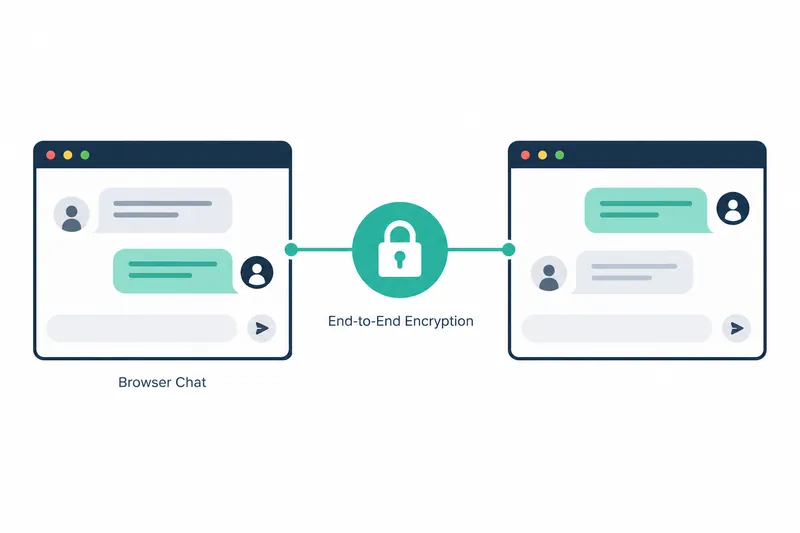
Open WebUI has added temporary chats that encrypt content in participants' browsers without storing it on the server. Users chatting with colleagues one-on-one or in private groups can now talk without keeping a record.
1. The server relays content without retaining it
The release notes and changelog for 0.12.3, released on October 16, 2026, introduce end-to-end encrypted chat. End-to-end encryption protects content at the participants' ends. Browsers encrypt messages; the server relays ciphertext without storing it.
Messages are protected using an encryption method called MLS.
Each message can be up to 16 KiB. This is a size limit for a single message, not a performance figure for transmission speed or throughput.
2. Start in a private conversation and verify participants
The feature works in direct messages and private group channels. When a member selects encrypted chat from the channel menu, others see a notice and a join link. It opens a temporary chat in an existing channel, not a separate contact list.
Participants can compare codes to verify each other. These codes are verification values participants compare, not program instructions.
The chat screen also shows when someone else is typing.
The chat is cleared when you leave or refresh the page. It also ends if channel membership or access permissions change. Do not assume the same encrypted conversation can continue after participants change.
3. Configure feature activation and user permissions separately
Admins can enable encrypted channels in General settings or via an environment variable. Use requires a separate encrypted channels permission, which is off by default. Feature activation and user authorization are distinct settings.
Below are the environment variable names for feature activation and user permissions, respectively, as written in the source. The release provides no execution commands or code examples with assigned values.
ENABLE_ENCRYPTED_CHANNELS
USER_PERMISSIONS_FEATURES_ENCRYPTED_CHANNELS
WebSocket connections are required. They keep browsers and the server connected to exchange messages. The source requires disabling WebSocket server logging and using HTTPS in production. Check connection and logging settings, not just menu access.
4. Less retention comes with operational checks
The benefit is not accumulating chat content on the server. Deployment work instead shifts to configuring permissions and communication settings. A simple channel menu choice should not be mistaken for a purely interface-level feature.
No server storage does not imply broader security guarantees. The release gives no details on preventing screenshots on participants' devices or external security audits. Assess security needs against documented behavior and operating requirements.
This addition does not declare all chat more secure; it offers a temporary conversation option separate from record retention.