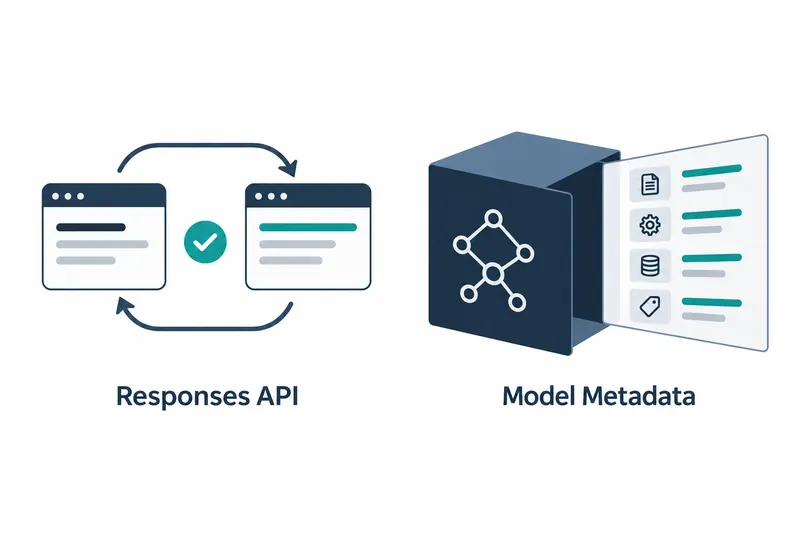
Ollama's latest release notes report fixes for conversations failing to continue when switching models or reusing history. They also report tool call ordering fixes and access to model-specific conversation processing details via the CLI and API.
1. Fixes to keep conversations going across model switches
Ollama's v0.40.7 release notes report fixes to conversation continuation in the OpenAI-compatible Responses API. Requests failed when switching between models with and without thinking support. This affects services using different models in one conversation.
Another fix covers conversation history containing compaction items from other providers. These items condense conversation content. The notes report fixes for failed continuation requests using such history, covering both model switches and external history reuse.
Both fixes concern accepting existing conversations before generating new answers. Developers can test follow-up questions after model switches and the submission of external history separately from starting new conversations.
2. Fixes for premature or duplicate tool calls
Tool call event ordering was fixed in streaming, which sends responses in successive chunks. Client tool calls appeared while reasoning items, containing the internal process of forming an answer, were still open, causing misordered or duplicate call events.
The release notes, which document version changes, cite Codex using web search as an example. The point is not added search functionality but corrected delivery order for reasoning and tool calls. Misplaced or repeated tool call signals were fixed.
This order matters to applications that receive events and display tool execution status. Checking the order in which tool calls arrive, rather than only the final answer, is a suitable way to assess the effect of this fix.
3. Inspect how models process conversations
Ollama's release notes report adding the renderer, parser, and chat template origin to model information. Renderers and parsers build and read conversation formats; chat templates arrange content for a model. These details now accompany model names.
Ollama says the following CLI command displays this information.
ollama showThe release notes say the API provides the same information through new fields. Ollama explains that renderer and parser identify the model's renderer and parser, respectively. Programs can now retrieve the same values people inspect via the CLI.
According to Ollama, template_source indicates where the chat template came from. This origin information offers an additional clue for developers checking each model's conversation format settings.
4. Checking conversation paths and integrating information are key
A starting point for using these changes is reviewing which conversation paths a service uses. Services that switch models or accept other providers' history can check continuation; those using tools can focus on streaming event flow.
Exposing model information makes processing behavior easier to inspect. Using it in management screens or automated checks requires integration to read and display the new response fields. Turning this improvement into easier management remains client-side work.
Conversation fixes and information exposure serve different purposes. The former affect continuing existing conversations; the latter expand ways to inspect model settings. Checking conversation behavior and model information usage separately is appropriate.
Ollama v0.40.7 focuses on fixing conversation interruptions and mixed-up tool calls, while expanding ways to inspect how models process conversations.