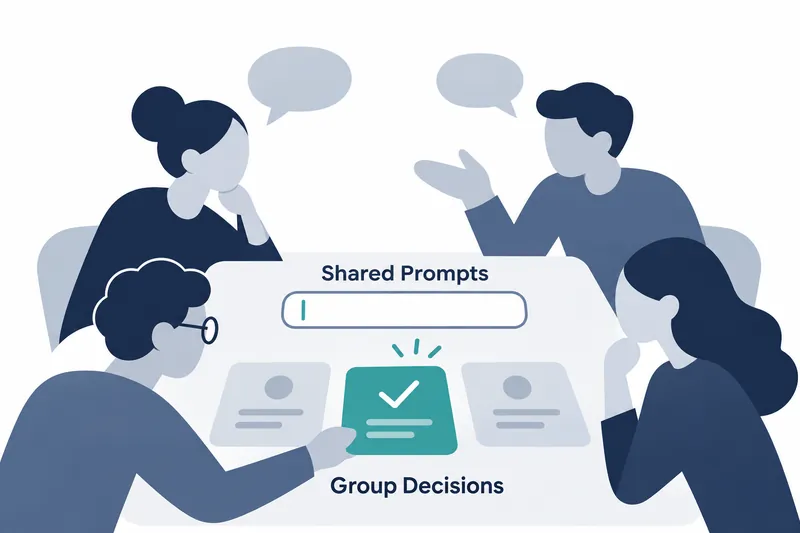
On November 11, Google Labs unveiled Tabletop, an experimental product bringing group conversations, planning and decisions into one place. Users can add files and links, ask AI to create tools such as schedules or polls, and share invite links to use them with other members.
1. Use chat and tools together in a space
Tabletop is a collaborative space for planning things together, such as trips, events or hobby gatherings. Google describes it as an experiment in real-time collaboration. Members can exchange messages and voice notes, and create conversations involving only specific members.
Each space can contain small web tools called tabs. These can range from checklists, polls and countdowns to games and prediction markets, with changes reflected in real time as members use them together.
Files, links and information remembered by AI within a space become shared reference materials for the group. Each space's memory is used only within that space, and members can review, edit or delete it.
2. Turn requests into tools and invite members
Users add links, files and ideas, then call on Tabletop in a conversation with a request or select a ready-made template. When creating a space, they can choose templates for shared living, study groups or travel planning.
In Google's example, a request for a spinner with dinner venues in Santa Fe and stops along the way produced a tab for choosing a restaurant and pinned four stops. It shows how a travel plan can become a selection tool members use together, rather than remaining just a conversation.
To change a tool, users can ask AI again or edit the code directly using the tab's editing feature. They can also ask AI to gather ideas from a conversation, summarize it or modify an existing tab.
Members can join simultaneously when an invite link is created from the space menu and shared in a group chat. Invitees can enter the space without waiting on the waitlist.
3. Accumulating records makes permissions and data management important
Bringing materials, conversations and outputs into one space can reduce the work of organizing them across separate documents and polling tools. However, Google says it collects conversations, prompts, uploads, generated outputs and tab data. It uses them to provide and improve the product, for machine learning, and to develop technology that learns patterns from data to make predictions. Some data may be reviewed by people for quality control and abuse prevention.
Users can opt out in settings from having future conversations and data used to train generative AI models. If even one member opts out of training, that space will not be used for training.
Space administrators can remove members or delete the entire space, and the space and its contents are deleted when the last member leaves. Members can restrict access to or delete tabs they have created.
When someone leaves a space or is removed by an administrator, their access ends, but messages, tabs and uploads they have not already deleted remain for other members. Leaving and deleting materials are therefore separate management tasks.
4. Access is limited to adults in the US
Tabletop is available via a waitlist to users aged 18 and over in the US. The app states that work and school accounts are not supported. Invited users can skip the waitlist, but cannot do so using their own invite links.
Google notes that tabs are created by members and that AI outputs may contain errors. It therefore warns against using the results as a basis for professional advice, including medical, legal or financial advice.
Tabletop turns group decision-making into shareable tools, with convenience depending on how groups manage the information and permissions that accumulate in each space.