Google's latest Flash-family model, Gemini 4 Hydrogen, is now generally available in GitHub Copilot. Developers on supported plans can select it in editors, on the web, and on mobile. Administrators can govern member access.
1. A model for multistep coding with tools
On November 13, 2026, GitHub announced the general availability of Gemini 4 Hydrogen in GitHub Copilot. This adds another coding model developers can select in their existing Copilot environment.
GitHub says the model is designed for fast, efficient agentic coding, using tools to carry out tasks. It targets workflows that follow instructions, use tools, and proceed through multiple steps. The focus is on ongoing tasks, not just single responses.
The company says instruction following has improved over the previous generation, Gemini 3.8 Flash. This comparison is the company's claim and aligns with the model's stated focus on agentic tasks.
2. Select it in familiar tools on individual and organization plans
Copilot Pro, Pro Plus, Max, Business, and Enterprise users are eligible. They can choose the new model in each tool's model picker. Rather than moving work to a separate service, they select it where they already use Copilot.
Supported editors include Visual Studio Code, Visual Studio, JetBrains IDEs, Xcode, and Eclipse. The direct change for developers is the ability to select the same model across multiple development environments.
The model is also available on the GitHub website, in the Copilot app, and in GitHub Mobile for iOS and Android. Availability extends beyond desktop editors to the web and mobile.
Copilot CLI, the coding agent, and the Copilot SDK are also supported. This adds a model option not only for editor chat but also for development workflows using the command line or agents.
3. Check the model picker during the phased rollout
GitHub is rolling out the model in stages to successive groups and advises users to check again later if it is not yet listed. After checking plan and tool support, look in your environment's model picker to see if it is available.
4. Review usage costs alongside the broader choice
The model uses usage-based billing, with charges proportional to consumption at the model provider's published list prices. GitHub points to Copilot's model and pricing documentation for detailed costs. Prospective users can check billing terms there.
Developers gain another model for agentic coding across multiple work environments. The associated cost to review is usage-based billing for that model. Practical selection depends on both its fit for the work and its usage costs.
5. Organizations manage access through default enablement and model policies
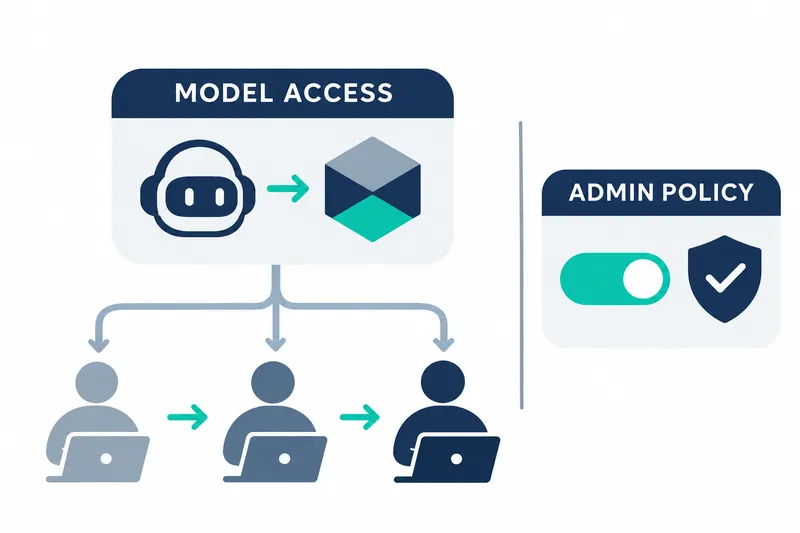
Copilot Business and Enterprise administrators can manage access through model policies in Copilot settings. These rules determine which models an organization can use. Model selection depends on both plan support and administrator access policies.
The new model is enabled automatically for organizations with default model enablement. This applies if administrators have neither turned off the global default, which applies organization-wide, nor explicitly disabled this model.
Administrators manage access to the new model through organization defaults and individual model settings. Unlike individual users checking the model picker, organizations should start by reviewing these policies as well.
This addition broadens Copilot's agentic coding choices while making usage costs and organizational access policies part of the adoption decision.