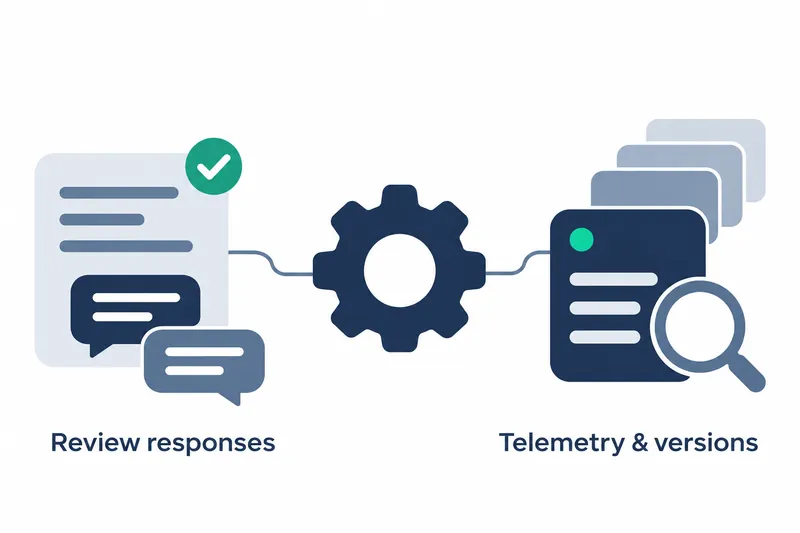
On November 5, 2026, GitHub added code review response data and missing-data diagnostics to the Copilot usage metrics API for enterprise and organization administrators. They can examine how developers handled review feedback by repository, a space for storing code and files. They can also identify users with missing editor data or environments below supported minimum versions for follow-up.
1. Tracking code review responses by repository
Each row in daily enterprise and organization repository reports includes a copilot_code_review object. It counts pull requests merged after Copilot's first review without a human requesting further changes, along with review comments developers responded to. Pull requests are code changes submitted for review before merging.
total_comments_evaluated counts comments evaluated for developer responses, while total_comments_addressed counts those acted upon. Responses include applying suggestions, asking Copilot for changes, editing code directly, and replying that a fix will come later. Dividing addressed comments by evaluated comments gives the repository's response rate.
Both counts are broken down by severity, review rating, comment type, and customization status. Administrators can compare responses to bug and security comments, or examine how response patterns differ in reviews using custom instructions.
The existing suggestion application count only tracks cases where someone applies a directly applicable suggestion. The new counts cover all evaluated comments, including replies and direct edits, offering a broader view of developer responses.
Comments are evaluated when the pull request is merged and recorded against the merge date.
2. Diagnosing telemetry and minimum-version gaps
User reports now include a field showing whether telemetry, or usage records sent by the editor, arrived on that date. If client_telemetry_present is false, Copilot detected user activity but received no usage events from the editor.
usage_metrics_requirements indicates whether the user's integrated development environment (IDE) and Copilot extension meet minimum supported version requirements. The statuses are met, unmet, and unknown.
Daily enterprise and organization reports also count users with missing telemetry and users below minimum versions. The 28-day reports provide daily counts, while per-user diagnostic fields appear in both daily and 28-day user reports.
GitHub cited outdated editors or extensions, disabled editor telemetry, and event-blocking proxies or firewalls as common causes of data gaps. Proxies are servers that relay communications. Administrators can identify affected users to narrow down follow-up actions, such as updates or checks of transmission settings.
3. Requesting reports and access permissions
Reports are retrieved through existing REST API endpoints, the addresses that receive API requests. Responses provide report dates and time-limited signed download links, temporary file addresses that validate access. Request a repository report for a specific date using YYYY-MM-DD. The documentation gives this enterprise repository report request example.
curl -L \
 -H "Accept: application/vnd.github+json" \
 -H "Authorization: Bearer <YOUR-TOKEN>" \
 -H "X-GitHub-Api-Version: 2026-03-10" \
 "https://api.github.com/enterprises/ENTERPRISE/copilot/metrics/reports/repos-1-day?day=DAY"
Enterprise owners, enterprise billing managers, organization owners, and users granted permission to view Copilot metrics have access. The usage metrics policy must also be enabled. OAuth app tokens, credentials used to delegate app permissions, and classic personal access tokens need permissions matching the enterprise or organization report scope.
4. Counting rules to keep in mind
Users with missing telemetry may count as active, but their line counts and feature- or model-level details are absent. The same user may appear in both missing-telemetry and below-minimum-version counts, and may recur across daily counts. Do not add the two counts or counts across multiple days to derive a unique user total.
5. Greater visibility and interpretation demands
Administrators can examine review responses and data gaps directly without opening a support request. Analysis also gains operational work: examining repository review reports alongside per-user diagnostics and linking identified issues to the relevant users.
The value of this expansion lies in moving beyond counting Copilot usage to examining both developer responses to reviews and the environment collecting the data.